Clogged Drain in Vila Matilde? How to Vet a Desentupidora Before You Say Yes
By the end of this piece you will know exactly which checks separate a reliable crew from a risky one, so you can hire a desentupidora Vila Matilde São Paulo SP with confidence instead of guesswork. The short answer: verify identification, written pricing, equipment, and post-service guarantees before anyone touches your pipes. Everything below is framed as the questions I actually asked while reviewing local providers in this neighborhood on São Paulo’s east side.
What should you confirm before booking a desentupidora in Vila Matilde?
Vila Matilde is a dense residential district with a mix of older houses, low-rise apartment blocks and busy commercial streets along Avenida Waldemar Carlos Pereira and the metro corridor. That mix matters because blockages here are rarely identical: a 1970s house may have clay or cast-iron lines, while a newer building uses PVC with tighter bends. A provider that treats every call the same way is already a warning sign.
The first thing I check is whether the company can describe its process before arriving. A serious desentupidora Vila Matilde will ask what is backing up, whether it is a sink, toilet, floor drain or the whole property, and whether the problem has happened before. Those questions tell you whether they diagnose or just push a cable down the line.
Identification and arrival
Ask for the technician’s name and the company’s CNPJ before the visit. On arrival, the team should be uniformed, carry visible identification and arrive in a marked vehicle. If someone shows up unannounced claiming a neighbor sent them, that is not a provider you invited.
Written estimate versus verbal price
A verbal price given over the phone is a starting point, not a commitment. The reliable pattern is a written or messaged estimate that states the service, the equipment used, and what happens if the blockage turns out to be deeper or caused by roots. Never approve work based on a number spoken at the door.
Which warning signs suggest you should walk away?
Most bad experiences in this trade follow the same script, and once you know it you can spot it in the first five minutes. The reviewer’s job here is not to scare you but to give you a checklist you can run in your head while the technician is still standing in your hallway.
- Pressure to approve immediately, with claims that the situation is an emergency only they can fix.
- No written quote, or a quote that changes after the equipment is already inside the drain.
- Refusal to explain what caused the blockage or to show you the material removed.
- Cash-only payment demanded before the work is finished.
- No receipt, no service order, and no contact number for follow-up.
One of these alone is not automatically disqualifying, but two together should end the conversation. A provider who cannot explain the cause is usually selling a temporary fix.
The upsell trap
The most common complaint I heard while checking local providers was the surprise addition of a second service mid-job. A legitimate team may recommend hydrojetting after a basic unclogging, but it should be presented as an option with a price, not as a condition for finishing the original job.
What does a properly equipped crew actually do on site?
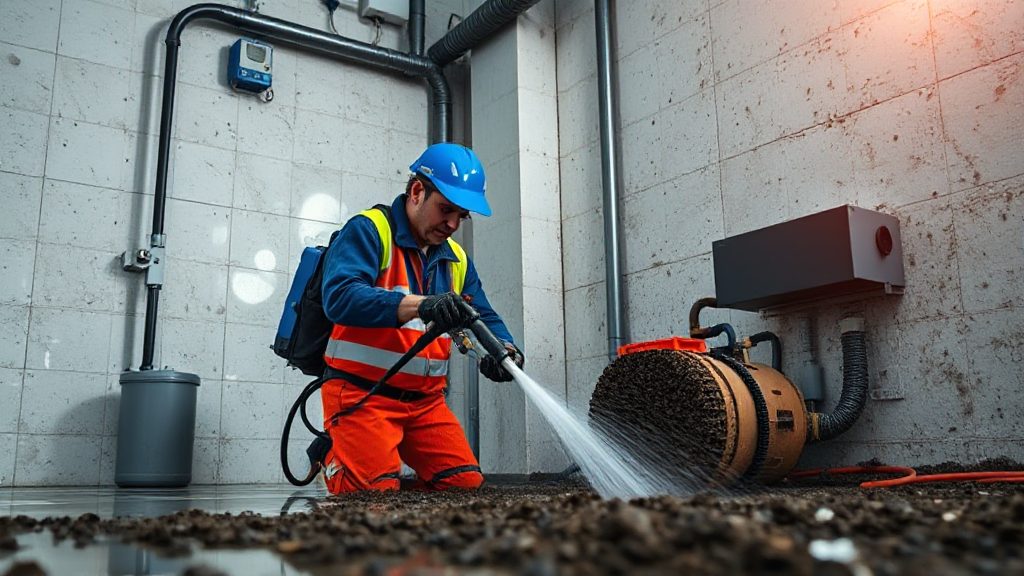
Equipment is the clearest signal of professionalism you can see with your own eyes. A basic hand auger and a bucket tell you the job is being improvised. A proper van carries a motorized drain snake, a hydrojetting unit, inspection tools and protective gear.
Step one: locate and diagnose
The technician should identify which fixture is backing up and whether the blockage is local or in the main line. If multiple drains are slow at once, the problem is usually downstream, not in the sink trap.
Step two: clear with the right tool
Grease and soap residue respond to different methods than roots or collapsed pipe. A crew that reaches for the same cable for every call is guessing. Hydrojetting uses high-pressure water to scour the pipe walls, which is more thorough than punching a hole through a blockage but requires the pipe to be structurally sound.
Step three: verify and clean up
After clearing, the technician should run water through the line and confirm the flow is restored. Then they should clean the area and remove debris. Ask what was removed and where it came from, because that answer tells you whether the fix will last.
How much should a desentupimento in Vila Matilde reasonably cost?
Prices in São Paulo vary with access, time of day and the type of blockage, so any fixed number quoted online should be treated with suspicion. What you can compare is the structure of the quote: a call-out fee, a service fee, and a stated extra for after-hours or for hydrojetting.
| Scenario | What drives the price | What to ask |
|---|---|---|
| Single sink or shower drain | Access and depth of blockage | Is the call-out fee included? |
| Toilet backing up | Whether the main line is affected | Will you check the inspection box? |
| Whole-property backup | Main line, roots, pipe condition | Do you use hydrojetting or a cable? |
| Night or weekend call | Emergency premium | Is the premium a flat rate or hourly? |
A quote that is dramatically lower than the others usually means the low price covers only the first attempt. The real cost appears when the blockage returns a week later.
Why does the 24-hour emergency promise matter in this neighborhood?
Backups do not wait for business hours. In Vila Matilde, a ground-floor apartment with a shared line can flood a kitchen overnight, and a commercial kitchen on a busy street cannot afford to lose a morning. This is where the difference between a scheduled service and a genuine emergency line becomes practical rather than marketing.
When I tested the emergency claim, the useful questions were simple: does someone answer the phone at 2 a.m., and can they give an arrival window? A recorded message that promises a callback is not the same as a dispatcher who can send a team. For residents and building managers, a desentupidora em Vila Matilde São Paulo SP that actually staffs the night shift is worth more than a lower daytime rate.
What to do while you wait
- Stop using water in the affected area to avoid overflow.
- Turn off the water supply if a fixture is continuously running.
- Move furniture, rugs and electronics away from floor drains.
- Keep the service order and the technician’s contact visible.
These steps do not fix anything, but they limit damage and make the technician’s job faster when they arrive.
How do you confirm the job was done properly before paying?
Payment is your last point of leverage, so use it. Before settling the bill, run water in every fixture connected to the line that was cleared, not just the one that was blocked. If the flow is slow elsewhere, the blockage was only partially removed.
Ask for a service order that describes what was done, the equipment used and any recommendation for follow-up. A provider that expects to be judged on results will not hesitate to put that in writing. A guarantee is only useful if it names a period and a contact.
Preventive maintenance worth considering
If your property has had repeated backups, a single unclogging is a bandage. Ask about a maintenance plan that includes periodic hydrojetting or inspection of the main line, especially for older buildings and restaurants with grease traps. That conversation is also a good test of whether the company thinks beyond the immediate call.
Finally, keep a record: date, technician, service performed and price. If the same drain fails again within weeks, that record is what turns a complaint into a legitimate claim for a return visit.
Frequently asked questions about hiring a desentupidora in Vila Matilde
Do I need to be home during the service?
Yes, in almost every case. The technician needs access to fixtures, the inspection box and often the building’s main line. For condominiums, the síndico or manager should be present or authorize access in writing.
Can a blockage be fixed without breaking the floor?
Usually yes. Most blockages are cleared through existing access points using a cable or hydrojetting. Breaking the floor is a last resort when a pipe has collapsed, and a reputable provider will explain why before proposing it.
Is hydrojetting safe for older pipes?
It depends on the pipe’s condition. High-pressure water is effective on grease and roots but can damage fragile or already-cracked lines. Ask the technician to assess the pipe first, and request a camera inspection if the building is old.
What should a service order include?
It should list the address, date, service performed, equipment used, price and any guarantee period. Keep a copy, because it is your proof if the problem returns.




More Stories
Slot Modal 5k: Mengatur Anggaran Main yang Masuk Akal
Who Calls, Who Pays: Brooklin Rental Drain Responsibilities
How to Choose and Use Hookah Tobacco Without Wasting a Bowl